The Pareto principle, commonly known as the 80/20 rule, states that 80% of your results come from 20% of your efforts. This principle applies to various aspects of life, including small businesses. According to Forbes, 20% of small businesses employ over 61.7 million workers, indicating that a small percentage of enterprises contribute significantly to employment opportunities. If you’re a small business owner looking to grow and succeed, here are some steps you can take to increase your annual revenue and reach the point where you can hire employees.
Enhance your social media presence: Social media can be a powerful tool for small businesses to increase their reach and drive sales. You can organically grow your social media presence by consistently posting engaging content and interacting with your audience. Alternatively, you can invest in paid social media ads and boosted posts to target a wider audience and increase sales. When creating ads, ensure that your focus drives sales and increases prospects rather than just growing followers. Remember, quality over quantity. A smaller, engaged following that converts into customers is more valuable than a large following with low engagement.
Utilize email marketing: Email marketing can be an effective strategy to nurture leads and keep your customers engaged. Create an email drip sequence that offers valuable content, such as freebies or exclusive discounts, and establishes an ongoing conversation with your audience. This can help you build trust and credibility, leading to more sales and repeat business. Personalize your emails based on your audience’s preferences and behaviors to make them more relevant and engaging.
Qualify your leads: Not all charges are created equal, and it’s important to focus your efforts on qualified leads that are more likely to convert into customers. Develop a checklist or criteria to qualify your information based on their needs, budget, timeline, and fit with your product or service. This can help you prioritize your resources and efforts on leads more likely to convert, leading to more efficient sales processes and better results.
Conduct surveys: Surveys can be valuable for gathering feedback and insights from your customers and community. Use surveys to learn more about your customers’ preferences, expectations, and pain points. This can help you identify areas of improvement, tailor your offerings to meet their needs, and uncover new growth opportunities. Ensure to incentivize participation, such as offering discounts or freebies, to encourage more responses.
Foster a growth mindset: The journey of growing a small business can be challenging, and it’s essential to maintain a positive and growth-oriented mindset. Believe in your capabilities and the potential of your business. Stay resilient and learn from failures and setbacks. Surround yourself with a supportive network of mentors, peers, or industry experts who can provide guidance and insights. Continuously educate yourself and stay updated with your industry’s latest trends and best practices. Embrace a growth mindset and keep striving for greatness.
In conclusion, the 80/20 rule can be a helpful framework for small businesses looking to grow and succeed. By focusing on strategies such as enhancing your social media presence, utilizing email marketing, qualifying your leads, conducting surveys, and fostering a growth mindset, you can increase your annual revenue and move closer to hiring employees. Remember, not all businesses succeed, but with the right mindset and strategies, you can position yourself among the 80% that thrive.
Robert B. Cialdini once said, “The aim is to get someone to want to buy quickly without thinking too much about it.” Let’s present some ideas about how we make decisions more quickly. What’s better, seeing a product or seeing the product being used in real life? It’s easy to say that it would be the latter. You want to see the product in use. Here’s another example: I trust 500 reviews about a company having horrible customer service. I will immediately move on to the next company with better reviews. I want to know what others think about a brand or business. It’s easier for us to know what others think or hear from someone we respect. This blog is the sequel to our latest blog, The Power of Influence. It’s about learning who helps us and our prospective clients make decisions on buying. When planning your funnel or your consumer personas, the intention of this is for you to discover who’s helping your ideal audience make their decisions. You can make the best plan and course of action. But we need to understand who impacts our ideal audience. We broke it down into four sections: recommendations, popularity, influencer, and lastly, user-generated content (UGC).
Who is endorsing your services or products?
First and foremost, recommendations. We can also refer to them as reviews, feedback, or referrals. Regardless of what they’re called, knowing that others trust your company will allow you to grow in more areas than sales. It’s like having a support group of people rallying behind your cause and hearing your company’s story. You truly understand what makes you stand out. If you’re just starting out your business, like us, this can help you get new clients without having to spend as much on advertising or boosting posts. People want to know about you and how reliable your services or products are. You’ll trust the opinions of a friend, loved one, former client, or a credible person (with accolades in the field) about a product or service. When a friend says they tried a product and liked it, you’re more likely to buy it for yourself and see if it works. Hearing a doctor support a new children’s medicine, we’ll be more comfortable having our children use it. For consumers, it’s about knowing you’re truly going to be there for them. Once they know they can trust you, you’ll see your brand grow or maintain your current goals. Some ways that you can help get your voice out there are by doing user-generated content (we will talk about this later), case studies, or testimonial videos. Like we’ve all said, word of mouth is what can turn your product into an Oprah product. Leading us right into our next topic, popularity.
I want to be popular
Not sure if this upcoming example is on Oprah’s list, but it is a great one. What’s the most famous fast food restaurant you know? I’ll give you a hint: it has two yellow arches that form an M. You got it, McDonald’s. We all know about how infamous Mickey D’s is. In their latest financial report, their revenue was $23.39 billion. When the masses are all in favor of a brand or company, you’re more likely to purchase from them. The same goes for your own brand or company. The more people talk about your brand and the incredible services (or products) you provide, the more people will talk about it. When it comes to expanding your brand, gaining popularity is a great way to create or maintain a consistent business. One way we do that is by getting others to promote our product, someone with the reach and the will.
Someone with a megaphone
When using your social networks to leverage your business, influencers are a great opportunity. They can help promote your business by being a magnified version of word of mouth. It’s a way to have people listen to your story from a new point of view. Thanks to the Digital Marketing Institute, we now know that almost 50% of consumers depend on influencers’ recommendations. Maybe you’re in the fashion (or beauty) industry, or maybe your demographics are predominantly female. These are some of the areas that may be impacted by working with influencers. Having someone who wants to speak up on behalf of your brand can make a difference. Finding someone who endorses your brand, stands out in your industry, and is willing to speak up might be just what your brand needs. If you’re growing your brand or want to veer into a different space with prospective consumers, this could help. Understanding how to know what it’s like to work with your product or service, user-generated content is the way to go.
Envision
We have moved into the final part, user-generated content, also known as UGC. Recently, you might have seen people’s social profile bios saying they are “UGC creators.” This is a new source of content that others want to see. Wikiepedia says, “It is any form of content, such as images, videos, text, and audio, that has been posted by users on online platforms such as social media, discussion forums, and wikis.” People want to see how others use a product in real time. Just think about it. Would you rather see a folded up quilt for sale or a video of a couple laughing while snuggling up in a bedroom using the same quilt? We all want to know that there are joyous moments filled with the products or services we buy. Nosto says, “79 percent of people saying user-generated content highly impacts their purchasing decisions.” When we see others enjoying a product, it makes it easier to make a choice about whether we want to use it ourselves.
So the next time you’re thinking about building up your social proof and how it can impact your credibility and lead generation, think about who’s helping your prospective clients . To help with understanding who helps others make quicker decisions, we hope these four overarching components aid you in your social proof journey—whether it’s recommendations, popularity, influencers, or user-generated content. We hope the information we shared gives you a better understanding when building out your ideal consumer personas and mapping out how to reach out to your target audience.
You’re checking out a new restaurant. You’re looking for the best service and delicious food. You see a place but it’s 1.5 stars. I think we can both agree you’re probably not going to go there. We care what others think it helps us to make quicker and easier decisions about where we go to even what we buy. As Robert Cialdini coined it social proof. We all know the actions of this term, it’s when people follow the actions of others to replicate others behavior. There have been numerous articles and studies published over the years about this phenomenon in humans. For the purpose of this article, we are honing in on how it pertains to businesses and generating leads. We want to utilize this human behavior to impact how others see our brand and grow social presence in various communities. Social media is the main way we get our brand out there. When it comes to influencers, referrals and popularity most of us use social media to learn what products we trust and who to buy from. In this blog, we’ll break down how we use social media for social proof.
Social Presence
Social media platforms use algorithms based on the concept of social proof. Instagram, for example, will look for posts that receive a lot of interaction quickly (in the form of likes, story shares and comments) and will highlight those posts in the explore section. This gives an advantage to posts that start off well by putting them in front of more people, resulting in even more interactions. In other words, if a post receives a large number of likes and comments, people are more likely to interact with the account because they see that others are also interested.
The same goes for business social media pages. The more followers you have, the more likely someone viewing your page will follow you and think your business is trustworthy. Bringing me to my next point. People do business with companies they trust. The more trust you build with a potential customer, the higher your odds of landing the client or sale. Having lots of high-rated reviews, social media pages with lots of followers, and a collection of testimonials will show the potential client that your company can be trusted. For this reason, one of our most popular services is our social media management and advertising.
We integrate posting content consistently with advertising on social platforms to increase follower counts and leads. A recent study by Hootsuite showed that 46% of companies don’t integrate ads and social posts. A few additional aspects of social proof we haven’t touched on which might help your company are experts, celebrities, and certifications. If there are any certifications or awards that show you are great at what you do, obtain them and showcase them on the web. If you can get endorsements from experts in the industry, that will be a great asset for you. And, of course, having a celebrity endorsement can encourage fans to try out your product and give your brand some notoriety.
Interactive Calls To Action
Knowing how important interacting with your community of followers is, the question to ask is, what are some ways to increase interaction between your social platforms and your followers? Making organic posts, making content, resources, and graphics that aren’t about selling your products. It’s beneficial to post on holidays, wishing people a good day or weekend. Keep it fun; don’t always talk about yourself or what your company can offer. Create motivational posts, maybe even a meme or two. Polls can be another great option. This can range from anything like “Who’s your favorite superhero?” to “Which of our services have you had the best experience with?”. Going back to the idea of social proof, this can utilize people’s interest in knowing what others’ answers have been to urge them to interact. A piece of advice: stay away from political or strongly divided topics, as this can cause dissension and ugly arguments.
In Conclusion
Here we touch on the high level aspect of social proof. Next week, check back we are going to go into depth about the group who can affect your social presence and help you generate leads. Make sure you check our socials to stay updated on blog releases. Now in regards to brand awareness and building your social presence we know doing all this alone can be time-consuming and daunting. Subscribe to our newsletter for a free social media posting infographic! And if you want any help making this a reality for you, fill out the contact form.
The demand for content is rising. We’re all aware of how the pandemic altered the way we communicate and perceive business. More and more people are taking the leap to be their own boss. In the last couple of years, one of the top searched words was “freelancer.” According to Exploding Topics, there were 5.4 million new business applications last year. The struggle to stand out is greater for freelancers and small and medium-sized businesses. Your content will be what helps you. For marketers or those managing their own marketing campaigns, the kind of content you produce can affect how successful your company is. You want people to be captivated by your brand. And what kind of content is popular right now and can promote your business? It’s video content. That’s right, potential customers want to get a glimpse of your lovely face and learn more about your company’s values and brand. You need more than just writing in today’s world.
In this blog, we’ll dive into all the aspects you might need to know about video content. Forewarning: there is a lot of information here, so feel free to come back and visit when needed.
What are we going to talk about in this blog?
What is video content
Why is it so important
Different styles of video content
Description, recommendations, and the length of videos
Platforms for the different types of video content
How to measure success
What is video content?
Anything that is promoted, commercial, or advertised through a video is referred to as video content. GIFs, vlogs, tutorials, and webinars are just a few examples of what this can be. Who doesn’t love a good gif? You can share this content on social media, by email, or on your website. Videos can vary in length from short-form to long-form. Videos can be made in a variety of styles, including live action, animated, and screen recorded. Depending on where you want this to be, time can matter. Sometimes reading isn’t your thing, or you want something that will save you time. You can’t 2x your reading. Trust me, I’ve tried.
We start with company culture videos. These are all about who you are as a brand, your values, and what you do. According to Sprout Social, 71% of consumers either strongly agree or agree that it’s important for brands to raise awareness and take a stand on sensitive topics. Your consumers want to know what matters to you and your opinions. The digital world is changing from companies rarely sharing thoughts on life happenings to now speaking up on various matters. Videos are a way to do just that. 93% of marketers say video has helped them increase brand awareness. That’s a pretty high stat, especially if you’re building a brand or wanting to grow your presence. When launching a new company, invest some time into recording a few of these videos to go on your site. Examples include things like “about us,” “recruiting,” “q & a,” or “your company’s mission.”
Websites and social media are the best places for this. Whether it’s on your welcome landing page or an organic post, people can see who you are. You want these to be short-formed videos ranging from 30 seconds to 3 minutes.
2. Advertising Videos
We’ve seen them all the time on YouTube or on TV between shows. The term “video advertising” refers to a type of paid programmatic advertising in the form of video that appears prior to, during, or after streaming video content. There are many platforms where you can view ads, including those mentioned above, as well as social media content and display ads.
These videos range from as short as 5 seconds to 2 minutes. Given that viewers can skip after 5-10 seconds, the ideal length is 15 seconds or less if you want to keep their attention. Additionally, if you keep them this short, you can use them on Reddit, Facebook, Twitter, Instagram, etc.
3. Social Media Videos
Social media videos are one of the most versatile pieces of video content you can have. The top channels marketers plan to use this year are YouTube, LinkedIn video, and Instagram video. When wanting to make your brand more human, videos, whether organic or paid, are a great way to do that. It’s a fantastic way to introduce new products, respond to inquiries, and establish your brand identity. There are an endless number of ways to do this by going live on your page or posting a recorded video.
When using recorded videos, your posts on your story or page will be short-formed videos. Sprout Social states that 66% of short-form videos are the most engaging type of social content. When live streaming, the recommendation is to stay on longer than 10 minutes to get more exposure on your stream.
Webinars are online presentations or events in real time. This can range from fireside chats to keynote speaking at a virtual conference or lead nurturing events. Since the pandemic, virtual events have increased. Based on vFairs’ reports, 92% of businesses continued hosting virtual events even after physical events resumed. At this moment, virtual events are maintaining their hold, and it doesn’t look like they’re leaving anytime soon.
Event planning or hosting and wondering how long the event should go? Well, most events can last anywhere from 30 minutes to 90 minutes. Most live webinars last for an hour. An hour gives various guest(s) the opportunity to share their presentations and answer questions at the end. The goal when hosting or organizing an event is to stay on long enough to share your input and information. But you also want it to be short enough that you’re not holding the participants for long after the conversation is over. Recently, some groups have held an intro chat before the event and made it optional for the audience. If you’re wondering about what tools to use, you’ll be able to see more in the Live Events section below.
5. Vlog
Blogs are great, but what about a vlog? A vlog is a style of blog where videos are used as the content rather than written posts. People can learn more about your company’s customers and product development through vlogging. It gives your audience a deeper insight into who you are. Making a connection with your customers will increase their motivation to make a purchase. You can take advantage of the chance to market your work when a new product or service is released. Currently, 6 out of 10 people say they prefer watching videos online to watching television. That says a lot. Be one of the people they watch.
The time range of vlogs varies from a few minutes to an hour. To keep your audience focused, we recommend keeping your videos to about 15-20 minutes. On their websites or social media accounts, the majority of vloggers also have 30 to 90-second trailers or introductory videos. Just something to be mindful of. People who vlog use platforms like YouTube, which is currently the leader, or Vimeo to display their videos. YouTube is the most used tool, with 88% of users planning to use it this year.
6. Video emails
If you want to shake up your newsletters or emails, video emails are the best option. GIF videos, embedded videos, and videos with links to other platforms. By doing this, you can improve the likelihood that your emails will be forwarded, increase engagement with your subscribers, and increase open rates. You can use some of the other video content ideas to use in your video email.
Typically, you want to put the video at the top of the email. To get more open rates, let your subscribers know there’s video in the email. Most of these videos last between 30 and 90 seconds. You can use tools like MailChimp, GetResponse, SendinBlue, and others.
7. Educational/Course videos
Educational videos are informative videos explaining a certain topic or concept to help educate the audience. First off, these are wonderful for all of us who run businesses. New information is constantly available. Another way to monetize your work or services is to create a course. You could also start teaching others yourself. There is always someone willing to learn, whether the subject is photography, web design, or something else. Creating your own course gives you the option to go as in-depth as you want on an industry-specific topic.
Having said that, educational videos are more likely to last a bit longer than some of the earlier mentioned videos. They can be in either long or short form, lasting only a few minutes or several hours. The typical duration is between 6 and 12 minutes on average. Additionally, it can be set up as a single video or a collection of videos. Check out websites like Udemy or Skillshare if you’re interested in teaching or enrolling in a course.
8. Announcement or Teaser Videos
Fighting the urge to say, “If you’re happy and you know it,” but really, this is about when you have some great news to share with your followers and clients. Or maybe you want to give them a preview of what’s to come. Whether it’s a company birthday or you have a new product launching, it’s a great way to inform your clients. You want to build excitement about what’s going on in your company. Other examples are: company events, customer shoutouts, and company awards.
These videos are short-form. The length of a video is two minutes or less. You can use these videos internally or externally to reach out to your community. When focusing on outreach, it’s best to post your videos on your social accounts.
9. Demonstrational/Product Tour Videos
Similar to educational videos, these videos provide informative tours of a business’s product or service to assist in bringing on new customers. In an effort to address the majority of your questions, they will guide you step-by-step. These are frequently used to demonstrate new digital software or online tools. They’re meant to help users feel more comfortable with the interface and more acclimated to the product. As part of this, users are shown any new or crucial features as well as management advice for the tools.
The length of instructional videos can vary depending on if they are promoting new features or onboarding a new team.
10. Testimonial/ Review Videos
We feel complete when our clients tell us we’ve met and exceeded their expectations. It’s satisfying to have the chance to hear and see them express their ideas to others. Testimonial videos help you achieve this by allowing your customers or clients to share their positive experiences in a video format. Although written endorsements are great, nothing says more about the value of your work or product than hearing or seeing how it affected someone. We all understand the power of word-of-mouth recommendations! If you’re trying to attract new clients or customers, this video content is excellent to have.
The length of the video is about 2 minutes or less. Most of the time, the preferred time is about 15 to 20 seconds. This video can be used not only on your website but on your social media, ads, and email marketing as well.
11. Case Study Videos
Case study videos show prospective clients why you are the best choice by highlighting the successes and experiences of your clients. Case studies in general are a fantastic way to promote your business’s efforts and attract new customers. It demonstrates how your company tailors a solution to your customers’ problems. Ensure that the advancements you communicate are supported by data and analytics. You want to include on-camera interviews with your clients or customers.
The length of the case study video is about 45 seconds to 2 minutes. We will overlap some other content types by including testimonials, but you could also include videographics (we will be adding this section soon). You can embed them into an email, your website, or share them on social accounts. Here’s a guide to help you build out a case study.
Platforms for videos
Virtual Events
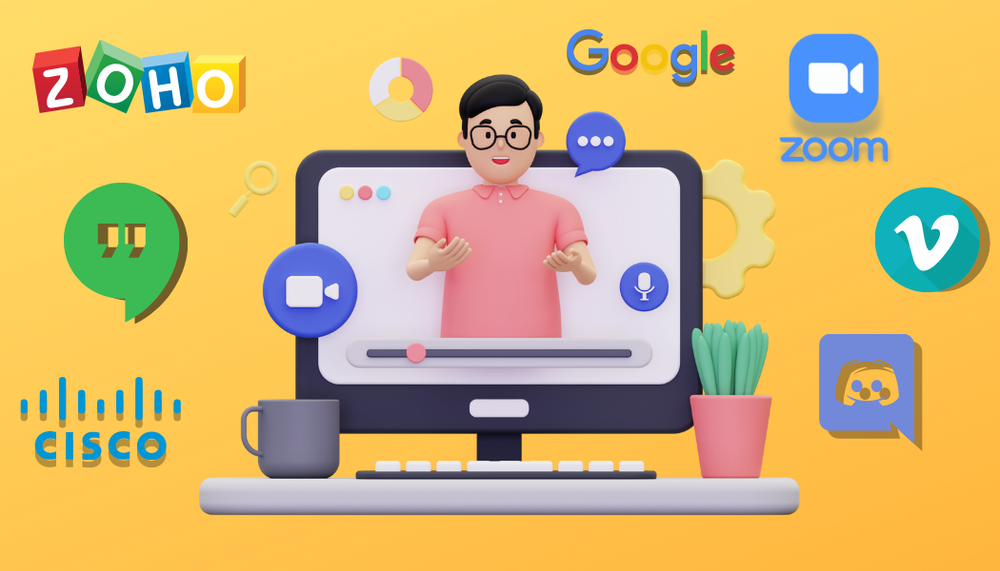
As mentioned before, virtual events are a great way to engage with your current and prospective clients. Here we will just list out some software you can use for event hosting. If you want to balance multiple streaming services at once, check out Restream.
Zoom
GoToWebinar
Vimeo
Discord
Zoho
Webex by Cisco
LiveStream
Google Hangouts
GetResponse
Demio
Social Posting
I know we talked about social media videos above, but we wanted to drop a little more information for you here. The recommended tools to help are:
When posting on social accounts like LinkedIn, Instagram, Twitter, and Facebook, there are a few ways to post your video. When creating posts, take into account the varying time constraints of the different platforms. Want some support? Sign up and get our free social media infographic.
YouTube and Vimeo are another beast of a channel as this is for short and very long formed video content. On average, people watch about 19 hours of online videos per week. That’s a lot. 88% of people intend to use YouTube this year.
How to measure success:
Insert a graphic of the few ways to measure success. You can do one, a few, or all of them.
Engagement: Linked, shares, and comments
How many views do you get?
Does it translate into lead generation or a number of clicks?
Do sales increase?
Customer loyalty
Brand awareness
In conclusion,
You’ve made it to the end. I know it may seem like a long read, but if you’re looking for more information, no worries. We plan on making this a dynamic blog where we add updates or new information. So, check back occasionally. If you’re still wondering if you should do this, just remember what we said earlier: 99% will continue using video content in their strategy this year. Yes, you heard that correctly, 99%. For anyone not camera shy, this is your time to shine. And if you’re not, no worries. We are your number one fans. Let us know if you need a cheer! Digital media, how we manage various forms of content, is changing, and right now there’s a strong winner of that content. Video content is on the rise. Yes, that’s right, video content is changing the world. As we run through this blog, you will learn just how important video content is.